
Two for the (U.S. Open) Show
New books on America's national championship
‘Tis the season for golf history, specifically a pair of appealing books about the U.S. Open, by two skilled writers long immersed in the sport.
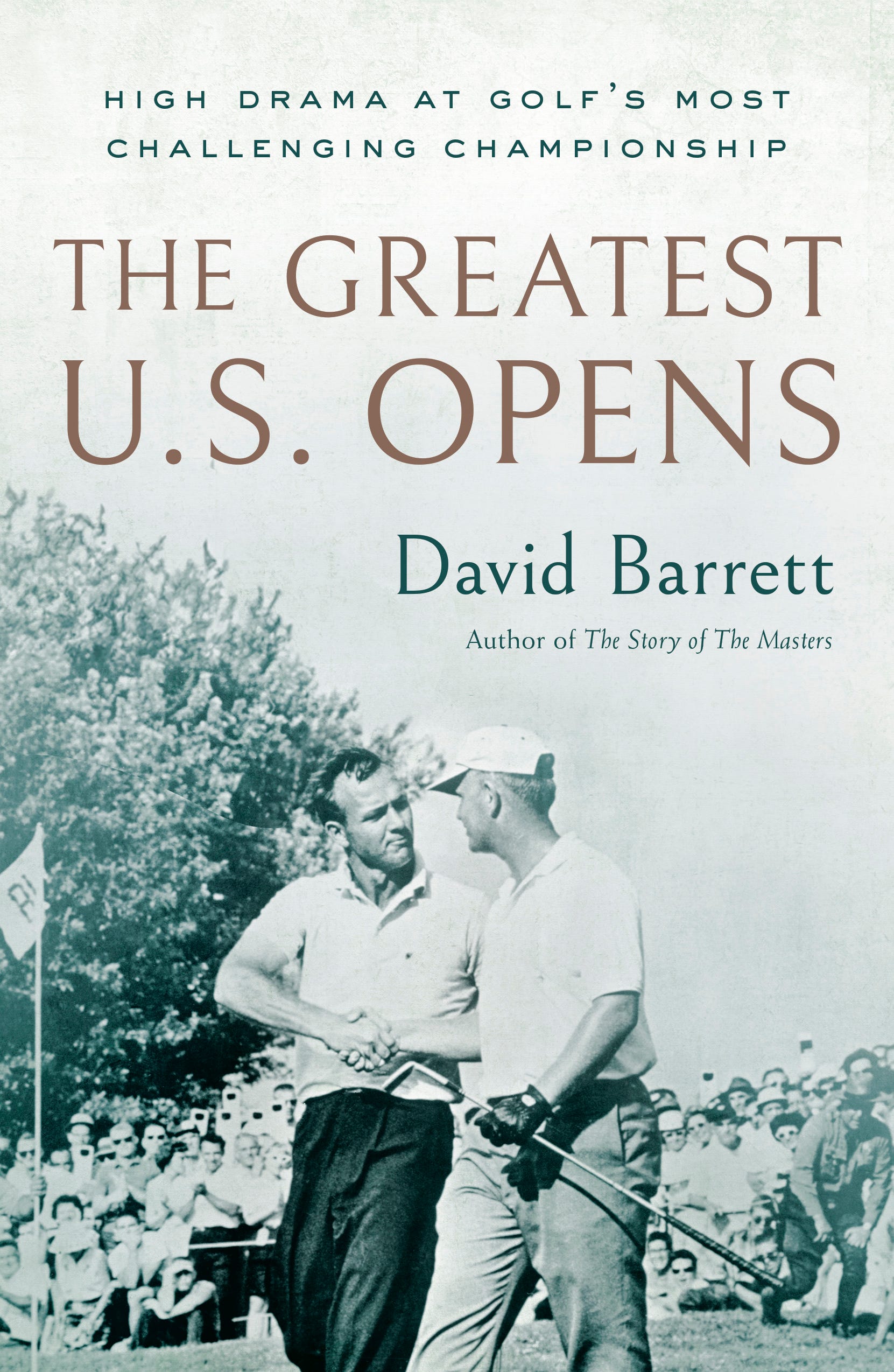
The Greatest U.S. Opens: High Drama at Golf’s Most Challenging Championship (Tatra Press, 277 pages) ably explores what author David Barrett identifies as the 20 top editions of the national championship, first held in 1895.
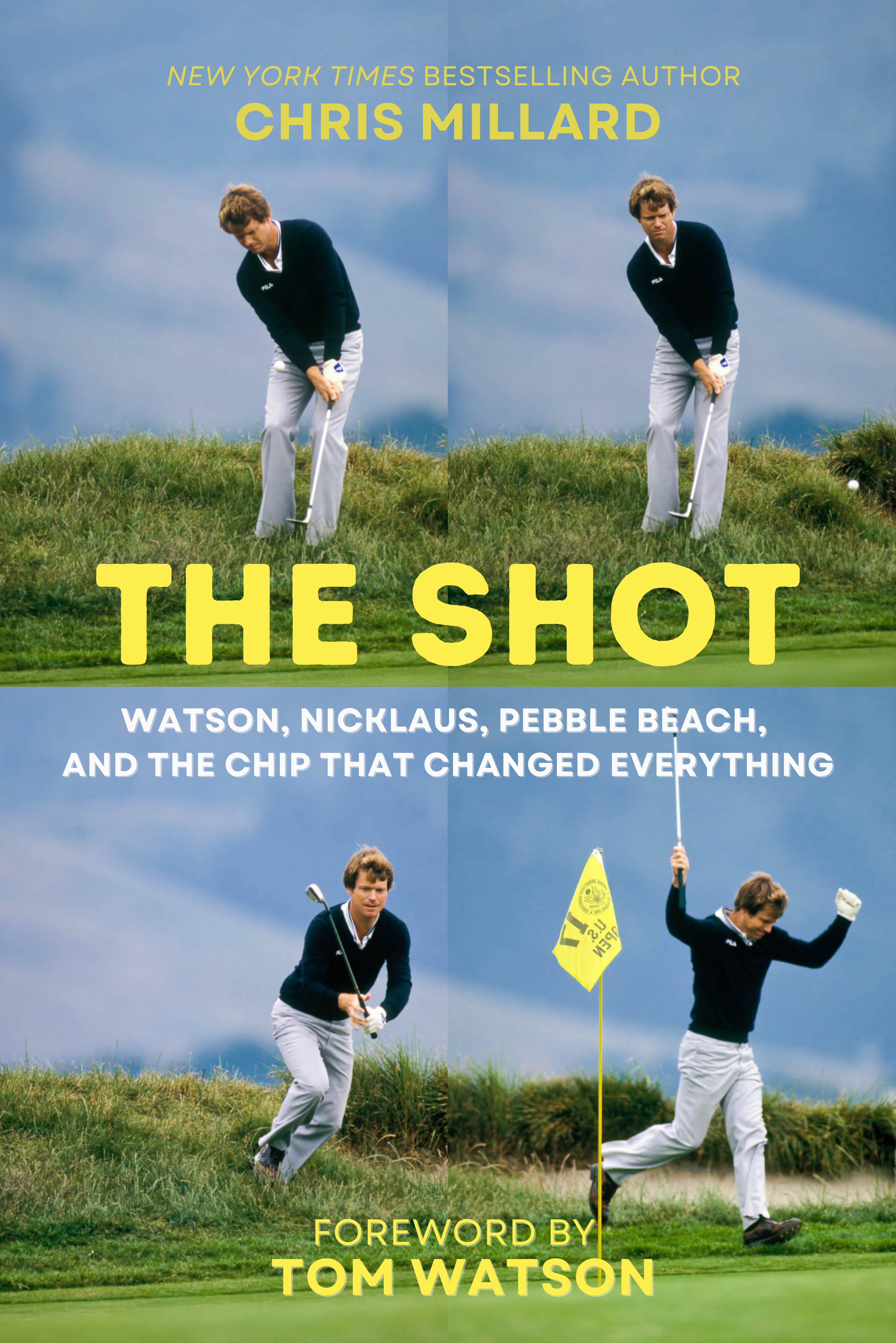
The Shot: Watson, Nicklaus, Pebble Beach, and the Chip That Changed Everything (Back Nine Press, 176 pages) is Chris Millard’s thorough examination of the memorable 1982 Open which, not surprisingly, makes Barrett’s survey as well.
The final round of the 2024 U.S. Open at Pinehurst No. 2 course, where Bryson DeChambeau held off a shaky-closing Rory McIlroy to win his second Open, was a good example of the kind of drama the championship can produce—and a reminder of how compelling the event can be. (One of Pinehurst’s previous Opens, Payne Stewart’s iconic 1999 victory, is covered in The Greatest U.S. Opens.)
Meticulous and possessing plenty of golf savvy, with multiple golf books under his belt, Barrett is well suited to the task. His The Story of the Masters (Tatra Press, 2021) offered a descriptive summary of every Masters, doing for that major what Robert Sommers did for the U.S. Open in his 1987 The U.S. Open: Golf’s Ultimate Challenge. One almost wishes Barrett had gone the full route with the U.S. Open, producing a 21st-century version of what Sommers did, but it’s understandable why he didn’t. Covering all 124 championships would have needed a lot of ink and a strong shelf. The very early years were tedious as golf was getting its footing in the U.S., and there also have been some duds in more modern times.
There aren’t many surprises in Barrett’s selections, nor much to argue about. He begins with amateur Francis Ouimet’s stunning playoff victory over Harry Vardon and Ted Ray in 1913 and concludes with Jon Rahm’s fantastic finish in 2021, when the Spaniard became the first golfer to birdie the last two holes and win the U.S. Open by one stroke. Along the way, stars (including Bobby Jones, Ben Hogan, Arnold Palmer, Jack Nicklaus, Lee Trevino, Johnny Miller and Tiger Woods) have some of their finest hours documented. So does a long-shot victor, Jack Fleck, who in 1955 at the Olympic Club denied Hogan a record fifth title. There is some space between the Opens Barrett has chosen with one exception: He chronicles the 1971 (Trevino), 1972 (Nicklaus) and 1973 (Miller) championships, a reminder that an era marked by gaudy clothing was chock full of great golf.
Watson certainly was no obscure figure in 1982, but his triumph over Nicklaus also blunted an icon’s bid for a fifth U.S. Open victory—and he did so thanks to a shot that is the well-supported centerpiece of Millard’s account of Watson’s lone U.S. Open victory.
The Shot, for which Watson provides a foreword, can be forgiven for a subtitle that veers toward hyperbole. Had Watson, playing in his 11th U.S. Open, prevailed at Pebble Beach by making 18 fairways-and-greens pars on Sunday, beating Nicklaus would have been a big deal, such was their place near the summit of men’s golf in that era. The way Watson did win— by holing an improbable greenside shot just when it appeared the Golden Bear had one hand on the trophy—made it a career-defining moment worthy of the treatment it receives in The Shot.
Before Watson holes his chip for birdie on Pebble Beach’s difficult par-3 17th hole—and birdies the par-5 18th for an emphatic encore—Millard provides useful context on the history of the famous course and about sports television.
A full, entertaining description of the 1982 broadcast goes in depth about how that U.S. Open marked the arrival of cable television (ESPN), foreshadowing the many hours of cable golf coverage that lay ahead. Millard also flashes back to the first televised U.S. Open, in 1947 at St. Louis Country Club, golf television’s Kitty Hawk, with recollections from Keith Gunther, who produced the local broadcast for KSD TV. He had two stationary cameras behind the 18th green. KSD had to fill a lot of time with interviews; Ben Hogan, who asked to be paid, declined. Money, it seems, mattered when pro golfers had little of it, just as it does now, when many of them have lots of it.
But prize money is of little importance in the stories of each of the 20 U.S. Opens documented by Barrett and the one that Millard zeroes in on. Once a long-held quest has become a hard-earned achievement, the champion relishes most of all the tiny letters engraved upon shiny silver.